
There are good meetings, and there are bad meetings. Bad meetings appear to drag on forever, they never seem to get to the point and are a waste of time. Effective meetings leave us energized and feel that we have really accomplished something.

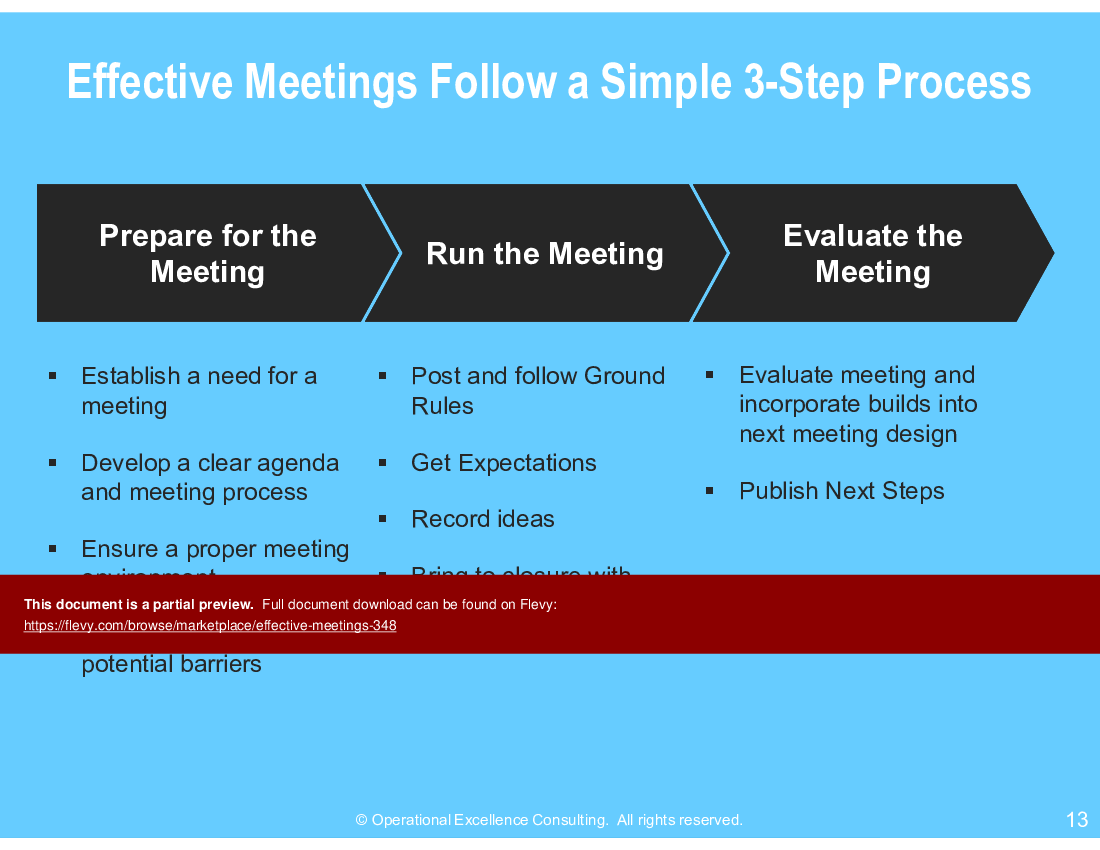
This presentation provides a simple three-step process for running effective meetings. It includes planning, conducting the meeting, review and follow up, as well as useful tips for successful meetings.
This presentation can be used to educate management and staff on the technique and practices of running effective meetings. The guidelines or practices presented are used by consultants in the top tier consulting firms.
LEARNING OBJECTIVES
1. Make the necessary preparations for a meeting to achieve the desired outcomes.
2. Running an effective meeting.
3. Perform a meeting evaluation and follow up.
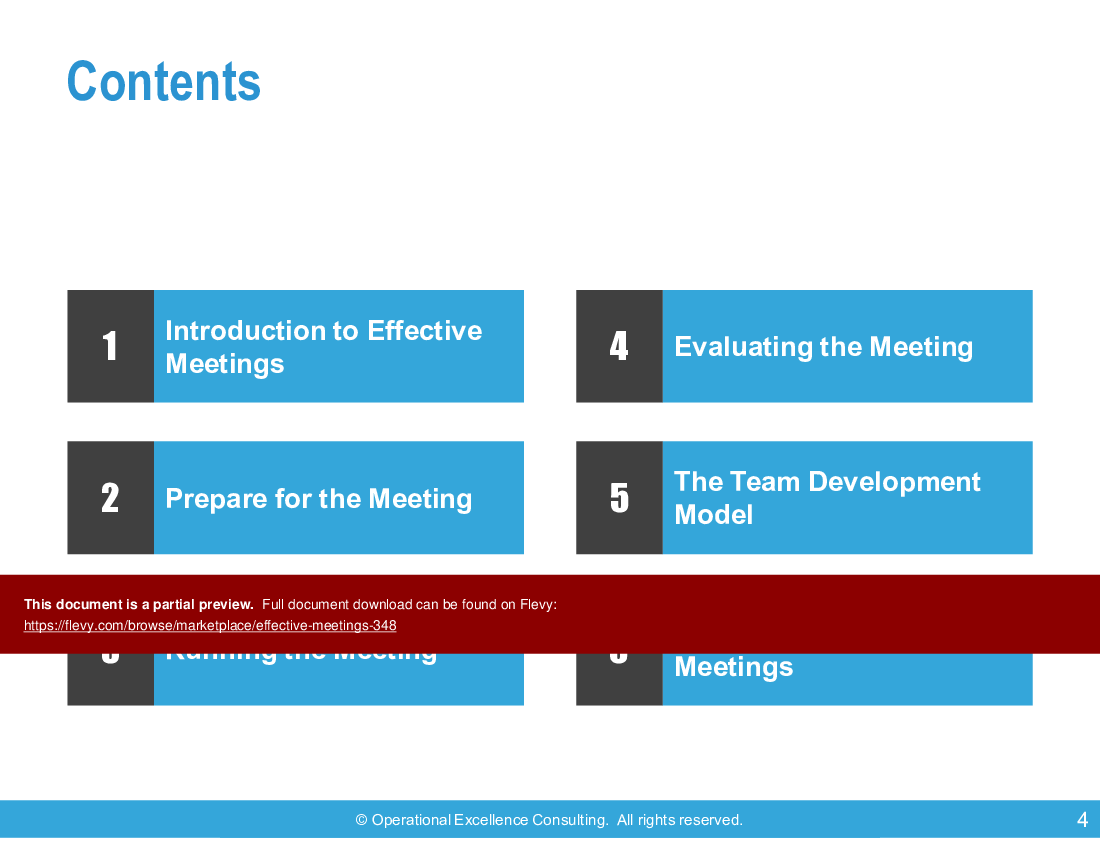
CONTENTS
1. Introduction to Effective Meetings
• Types of meetings
• Developing and using the agenda
• Meeting tools and techniques
• The key messages
• Meeting roles and responsibilities
• The 3 steps for effective meetings
2. Preparing for the Meeting
• Plan more, meet less
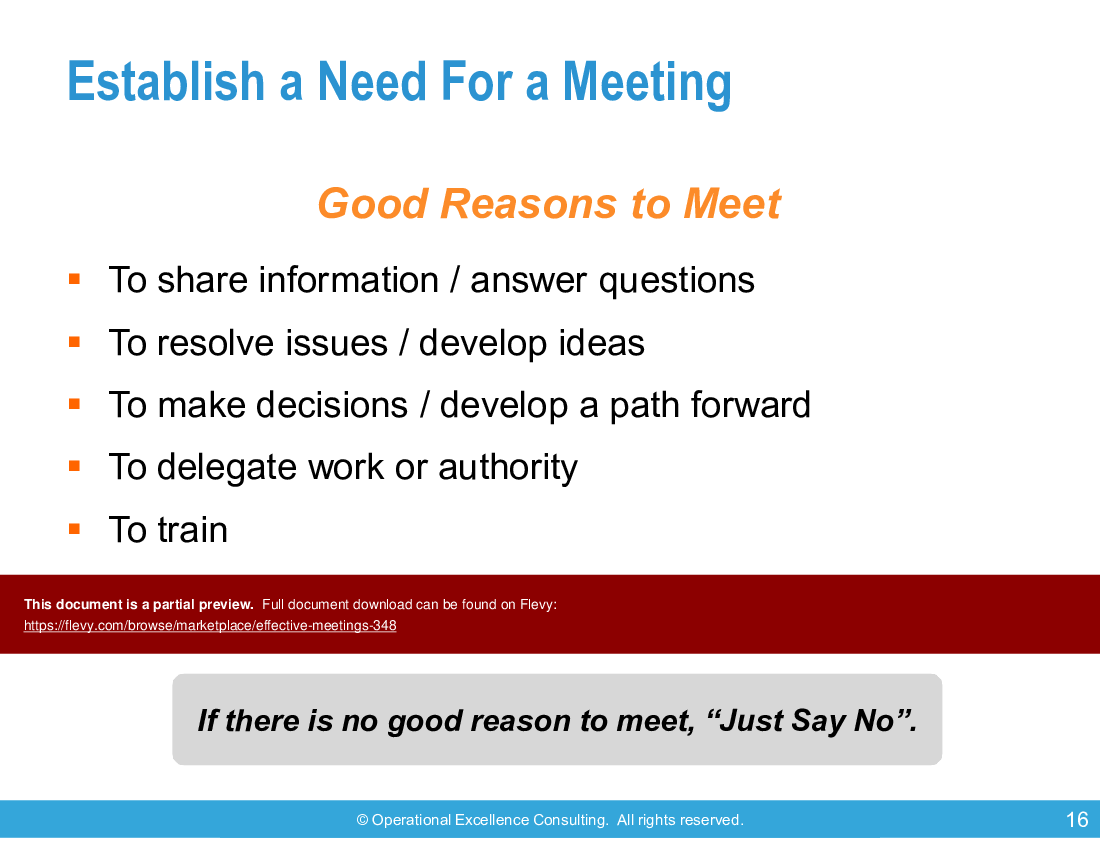
• Establish a need for a meeting
• Develop a clear agenda and meeting process
• Guidelines for an effective agenda
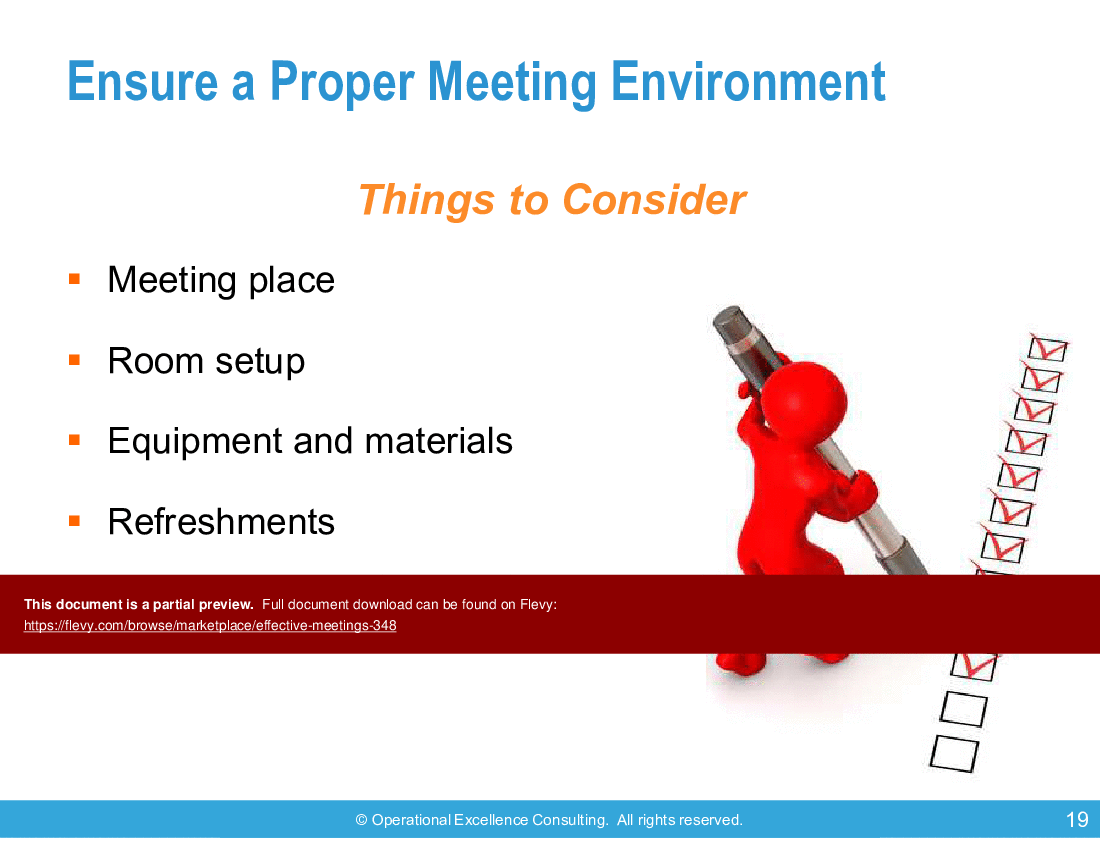
• Ensure a proper meeting environment
• Identify and overcome potential barriers
3. Running the Meeting
• Follow the agenda for a successful meeting
• Post and follow ground rules
• Get expectations
• Record ideas
• Flip chart techniques
• Bring to closure with next steps
4. Evaluating the Meeting
• Meetings as a continuous process
• Evaluate meeting and incorporate builds into next meeting design
• Publish next steps
5. The Team Development Model
• Forming
• Storming
• Norming
• Performing
6. Secrets to Successful Meetings
• Pre-position
• Benefits before concerns
• Straw models
• Participative decision making
• Active listening
• Headlining
This document also covers the essential tools and techniques for various meeting types, including problem-solving and strategic planning. Learn to manage meetings effectively and enhance team performance through structured processes and clear agendas.
Got a question about the product? Email us at support@flevy.com or ask the author directly by using the "Ask the Author a Question" form. If you cannot view the preview above this document description, go here to view the large preview instead.
Executive Summary
The "Effective Meetings" presentation offers a structured approach to planning, conducting, and evaluating meetings to enhance productivity and collaboration. Developed by Operational Excellence Consulting, this resource equips corporate executives, integration leaders, and consultants with practical strategies to ensure meetings are purposeful and result-oriented. Users will learn to establish clear agendas, define roles, and implement follow-up actions, ultimately transforming meetings into effective tools for decision-making and problem-solving.
Who This Is For and When to Use
• Corporate executives seeking to improve meeting effectiveness
• Team leaders responsible for facilitating productive discussions
• Project managers coordinating cross-functional meetings
• Consultants advising organizations on operational excellence
Best-fit moments to use this deck:
• When preparing for strategic planning sessions
• During team-building workshops to enhance collaboration
• For training sessions focused on improving meeting outcomes
Learning Objectives
• Prepare for a meeting to achieve desired outcomes
• Run an effective meeting that engages participants
• Perform a meeting evaluation and follow up on action items
Table of Contents
• Introduction to Effective Meetings (page 5)
• Prepare for the Meeting (page 14)
• Running the Meeting (page 22)
• Evaluating the Meeting (page 29)
• The Team Development Model (page 33)
• Secrets to Successful Meetings (page 52)
Primary Topics Covered
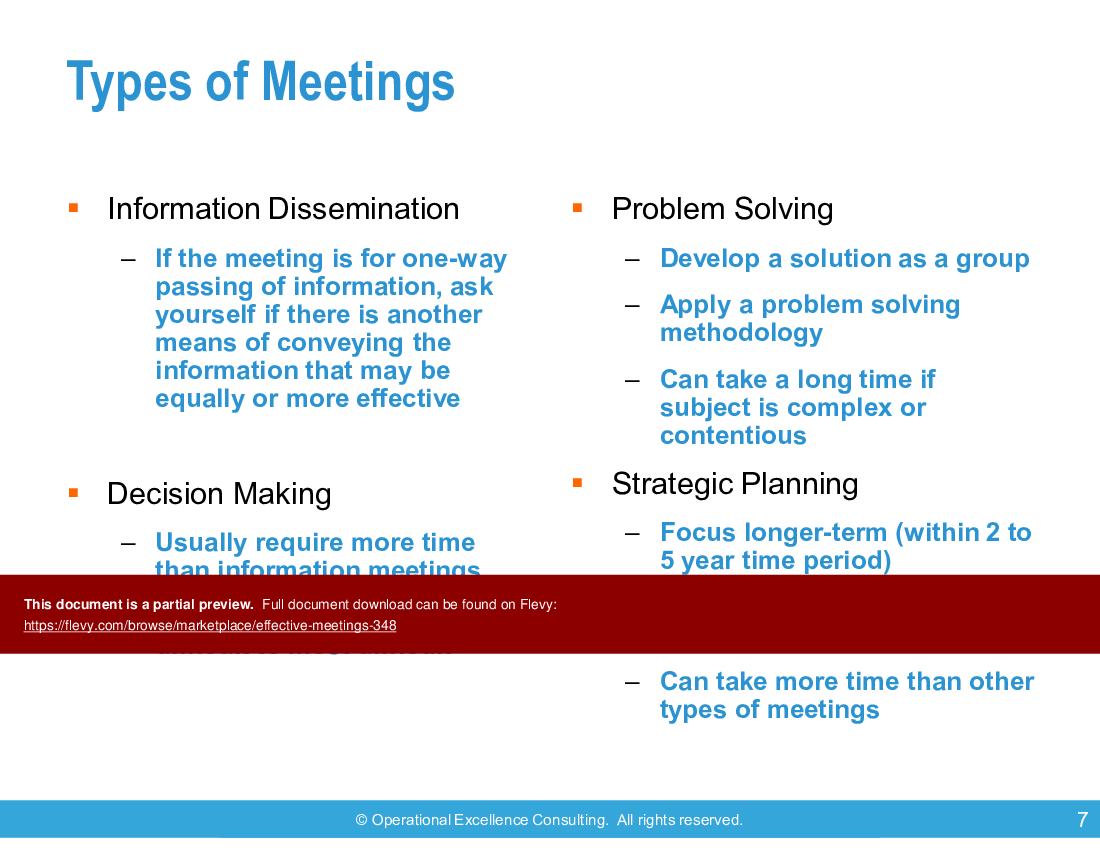
• Types of Meetings - Understand different meeting types, including information dissemination, decision-making, problem-solving, and strategic planning.
• Developing an Agenda - Learn to create a clear and effective agenda that communicates expectations and measures success.
• Meeting Tools and Techniques - Explore various tools such as icebreakers, action item lists, and roles/responsibilities to enhance meeting dynamics.
• Ground Rules - Establish basic ground rules to ensure productive discussions and active participation.
• Evaluating Meetings - Implement evaluation techniques to assess meeting effectiveness and incorporate feedback into future meetings.
• Tuckman’s Team Development Model - Utilize this model to understand team dynamics and enhance collaboration throughout the meeting process.
Deliverables, Templates, and Tools
• Meeting agenda template to outline objectives and topics
• Action item list template for tracking responsibilities
• Evaluation checklist for assessing meeting effectiveness
• Ground rules framework to guide participant behavior
• Team development model overview to facilitate discussions
Slide Highlights
• Overview of types of meetings and their purposes
• Guidelines for creating an effective meeting agenda
• Techniques for engaging participants and fostering collaboration
• Evaluation methods to improve future meetings
• Insights into Tuckman’s model for team development
Potential Workshop Agenda
Effective Meetings Workshop (90 minutes)
• Introduction to meeting types and objectives
• Developing a clear agenda and establishing ground rules
• Techniques for running engaging and productive meetings
• Evaluating meeting outcomes and planning for improvements
Customization Guidance
• Tailor the agenda template to fit specific meeting objectives and participant roles
• Adjust ground rules based on team dynamics and organizational culture
• Incorporate feedback mechanisms to continuously improve meeting processes
Secondary Topics Covered
• Importance of active listening in meetings
• Strategies for managing meeting time effectively
• Techniques for resolving conflicts during discussions
• The role of facilitators in guiding meetings
FAQ
What are the key components of an effective meeting?
An effective meeting includes a clear agenda, defined roles, established ground rules, and a focus on actionable outcomes.
How can I ensure all participants are engaged?
Utilize icebreakers, encourage active participation, and establish ground rules that promote respectful dialogue.
What should I do if a meeting goes off track?
Refer back to the agenda, remind participants of the ground rules, and redirect the conversation to stay focused on objectives.
How can I evaluate the success of a meeting?
Use an evaluation checklist to gather feedback on the meeting's effectiveness, participant engagement, and achievement of objectives.
What is Tuckman's Team Development Model?
This model outlines the stages teams go through: Forming, Storming, Norming, and Performing, providing insights into team dynamics and collaboration.
How often should I hold meetings?
Meetings should be held as needed based on project requirements, team dynamics, and organizational goals, ensuring they are purposeful and productive.
What tools can enhance meeting effectiveness?
Tools like action item lists, flip charts, and digital collaboration platforms can facilitate communication and track progress during meetings.
How can I prepare participants for a meeting?
Distribute the agenda in advance, clarify objectives, and provide any necessary background information to ensure participants come prepared.
Glossary
• Agenda - A list of topics to be discussed in a meeting.
• Active Listening - The practice of fully concentrating on what is being said to understand and respond effectively.
• Ground Rules - Guidelines established to govern participant behavior during meetings.
• Evaluation Checklist - A tool used to assess the effectiveness of a meeting.
• Tuckman's Model - A framework describing the stages of team development: Forming, Storming, Norming, and Performing.
• Action Item - A task assigned to a participant to be completed after the meeting.
• Facilitator - A person who guides the meeting process and ensures objectives are met.
• Icebreaker - An activity designed to help participants feel comfortable and engaged.
• Feedback Mechanism - A method for gathering participant input on meeting effectiveness.
• Team Dynamics - The behavioral relationships between team members during interactions.
• Decision-Making - The process of making choices or reaching conclusions during meetings.
• Problem-Solving - A collaborative approach to finding solutions to issues discussed in meetings.
• Strategic Planning - The process of defining an organization's direction and making decisions on allocating resources.
• Participant - An individual who takes part in the meeting.
• Meeting Evaluation - The assessment of a meeting's effectiveness based on predefined criteria.
• Roles and Responsibilities - Defined functions assigned to participants in a meeting.
• Follow-Up - Actions taken after a meeting to ensure tasks are completed and objectives are met.
• Collaboration - Working together to achieve a common goal during meetings.
• Time Management - The practice of organizing and planning how to divide time between activities during meetings.
• Consensus - General agreement among participants on a decision or course of action.
• Action Plan - A detailed plan outlining steps to achieve specific objectives discussed in a meeting.
Source: Best Practices in Meeting Facilitation PowerPoint Slides: Effective Meetings PowerPoint (PPTX) Presentation Slide Deck, Operational Excellence Consulting
This document is available as part of the following discounted bundle(s):
Save %!
Effective Facilitation Skills
This bundle contains 3 total documents. See all the documents to the right.
|
Download our FREE Organization, Change, & Culture, Templates
Download our free compilation of 50+ slides and templates on Organizational Design, Change Management, and Corporate Culture. Methodologies include ADKAR, Burke-Litwin Change Model, McKinsey 7-S, Competing Values Framework, etc. |